
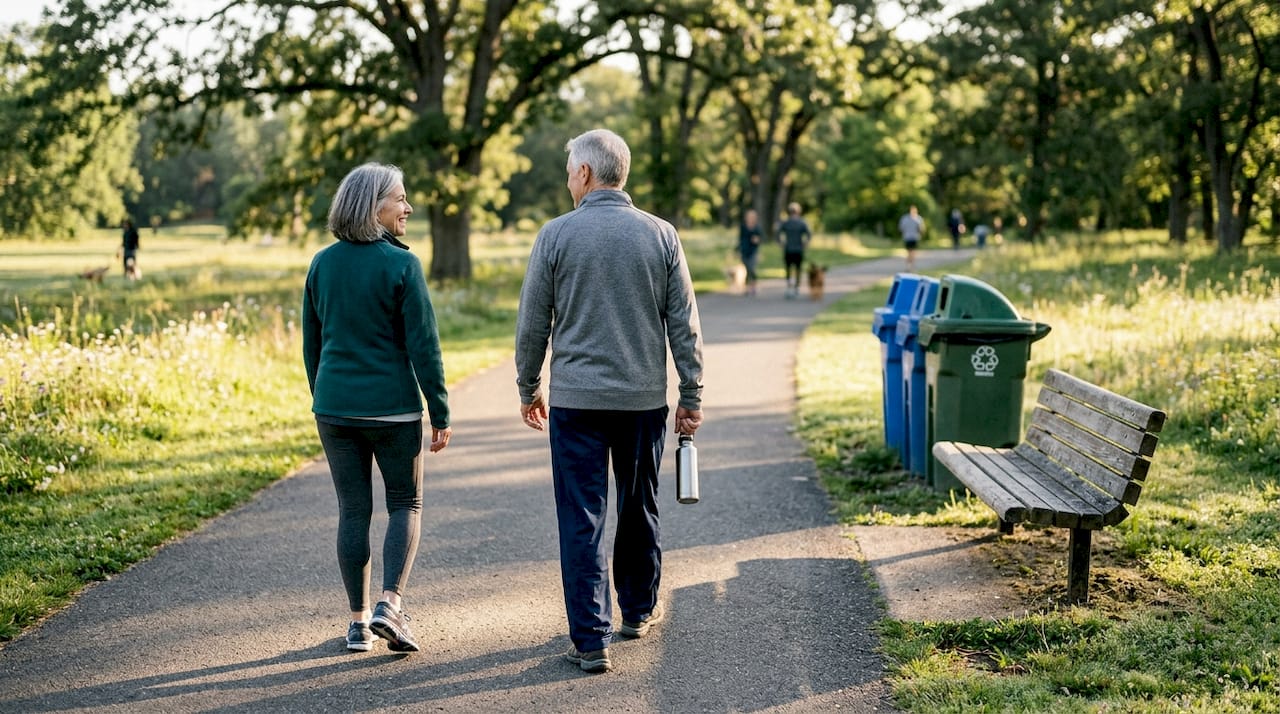
Active longevity isn’t just about reaching a ripe old age. It’s about arriving there with your mind sharp, your body capable, and your social life thriving. Most people assume longevity is a genetic lottery, something you either win or lose. But the latest science tells a different story. Active longevity emphasizes maintaining physical, cognitive, and social well-being throughout an extended lifespan, and the evidence shows you can meaningfully influence all three, starting right now. This article breaks down what active longevity really means, what the research says about the habits that matter most, and how you can build a practical, sustainable approach to thriving longer.
Table of Contents
- What is active longevity? Concept, origins, and scope
- Physical foundations: Exercise, strength training, and healthspan
- Holistic wellness: Nutrition, sleep, and lifestyle habits
- Social engagement, purpose, and sustainability in active longevity
- Why most longevity advice misses what truly matters
- Practical tools for your active longevity journey
- Frequently asked questions
Key Takeaways
| Point | Details |
|---|---|
| Active longevity defined | It means thriving physically, mentally, and socially for your entire life—not just living longer. |
| Exercise is foundational | Strength training and regular activity preserve muscle, bone health, and reduce mortality risk at any age. |
| Holistic habits matter | Balanced nutrition, sleep, and sustainable lifestyle choices support thriving longevity. |
| Social engagement adds meaning | Purposeful connections and active leisure extend healthspan, beyond physical wellness alone. |
| It’s never too late | Starting moderate, active habits—even later in life—produces significant longevity gains. |
What is active longevity? Concept, origins, and scope
For decades, the conversation around aging focused almost entirely on lifespan: how many years can we add? But that framing misses something fundamental. You can live a long life and still spend the final third of it in poor health, social isolation, or cognitive decline. Active longevity flips that script entirely.
Active longevity describes the union of engagement and long life, emerging as a response to demographic shifts and the growing recognition that healthy, contributory aging is both possible and necessary. It’s not a medical term or a wellness trend. It’s a framework for how we think about what a good long life actually looks like.
The concept spans three interconnected pillars:
- Physical engagement: Staying mobile, strong, and metabolically healthy well into later decades
- Cognitive vitality: Keeping the brain sharp through learning, challenge, and mental stimulation
- Social contribution: Remaining connected, purposeful, and actively involved in community and relationships
Think of it as the difference between passive longevity and active longevity. Passive longevity is simply not dying. Active longevity is continuing to live fully. If you’ve ever felt the pull toward the anti-aging obsession that dominates wellness culture, active longevity offers a more grounded, evidence-based alternative.
“Active longevity enables people to contribute meaningfully to society long into later life.”
This matters especially in the EU, where populations are aging faster than policy can adapt. The question is no longer just how long we live, but how well. A thorough healthy aging guide will tell you that healthspan, the years lived in good health, is the real prize. And unlike lifespan, healthspan is highly responsive to the choices you make every day.
What separates active longevity from generic wellness advice is its scope. It accounts for environmental sustainability, intergenerational responsibility, and the social structures that allow individuals to thrive. The longevity expert insights converging right now all point in the same direction: engagement is the engine.
Physical foundations: Exercise, strength training, and healthspan
With an understanding of active longevity’s scope, let’s look at the physical practices that drive its benefits. Exercise is not just one pillar among many. It is the cornerstone. Nothing else you do for your health has a comparable return on investment.
Strength training 2 to 3 times per week combats sarcopenia (age-related muscle loss), improves bone density, boosts metabolism, reduces fall risk, and lowers mortality. These aren’t marginal gains. They’re life-changing ones.
| Decade | Muscle loss without training | Benefit of strength training |
|---|---|---|
| 40s | ~3 to 5% per decade | Preserves lean mass, improves insulin sensitivity |
| 50s | ~5 to 8% per decade | Reduces fracture risk, maintains strength benchmarks |
| 60s+ | ~10% or more per decade | Cuts fall risk, extends functional independence |
Two benchmarks worth tracking: grip strength and VO2 max. Grip strength is a surprisingly powerful predictor of overall health and mortality. VO2 max, your body’s ability to use oxygen during exercise, declines with age but responds strongly to cardio training. Both are measurable, improvable, and deeply connected to how long and how well you live.
Flexibility and mobility work round out the physical picture. Yoga, stretching routines, and functional movement training help you stay injury-free and capable across decades. Explore strength training for longevity to understand how these elements work together.
“The greatest gains occur moving from sedentary to moderate activity. It’s never too late.”
A UK Biobank study confirmed that greater physical activity reduces mortality risk even among frail individuals. You don’t need to become an athlete. You need to move consistently. The sarcopenia solutions available today, from targeted supplements to structured resistance programs, make this more achievable than ever.
Pro Tip: Focus on technique before intensity. Poor form during strength training accelerates joint wear and raises injury risk. A few sessions with a qualified trainer early on can protect you for decades. Read more about aging gracefully to connect these physical benchmarks to a broader healthspan strategy.
Holistic wellness: Nutrition, sleep, and lifestyle habits
Alongside physical activity, your daily habits and recovery routines are vital to making longevity truly active. Exercise builds the structure. Nutrition and sleep fill it in.
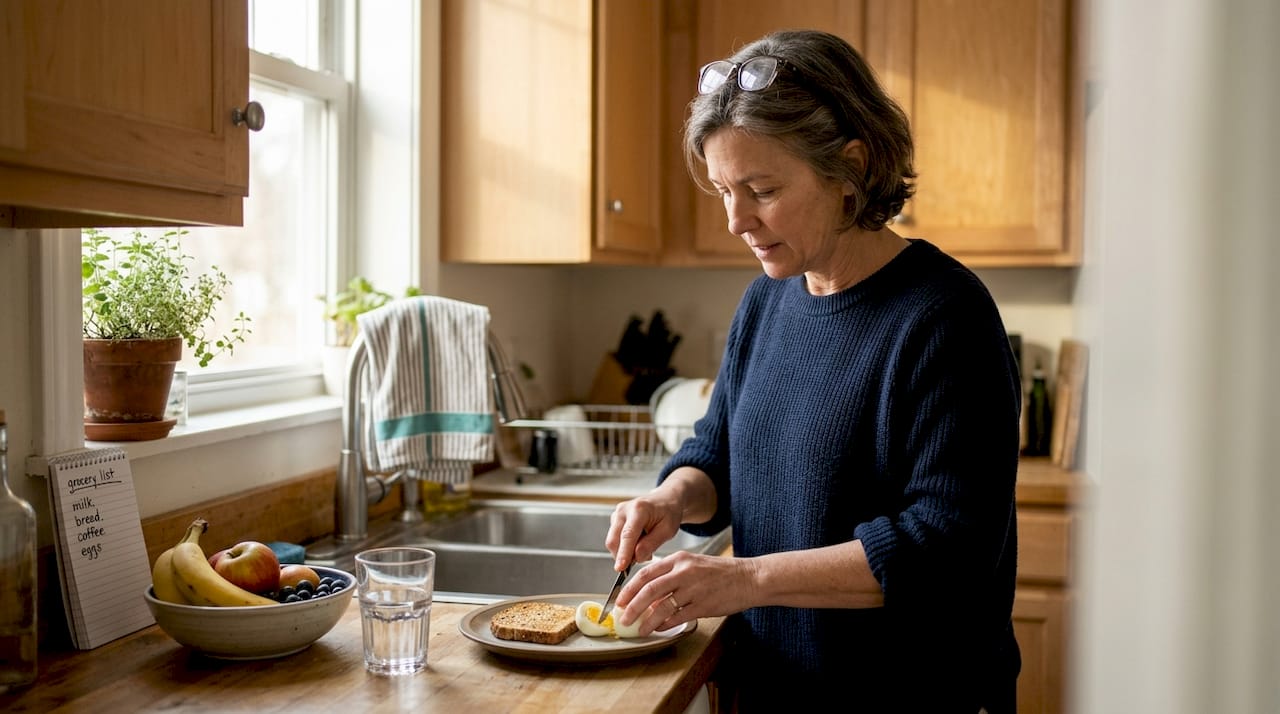
Protein is the most underrated longevity nutrient for adults over 40. Muscle synthesis slows with age, which means your protein needs actually increase, not decrease. Aim for at least 1.2 to 1.6 grams per kilogram of body weight daily. Pair that with a diet rich in whole foods, healthy fats, and diverse plant matter, and you’re giving your cells the raw materials they need to repair and regenerate.
Prioritizing protein intake and sleep to extend healthspan consistently outperforms extreme biohacking approaches. Accessible habits beat expensive interventions every time.
Sleep is where the body does its most critical maintenance work. During deep sleep, your brain clears metabolic waste through the glymphatic system, your muscles repair, and your hormones reset. Chronic sleep deprivation accelerates biological aging faster than almost any other lifestyle factor.
Here are the holistic habits with the strongest evidence base:
- Consistent sleep schedule: Going to bed and waking at the same time daily stabilizes circadian rhythms
- Protein at every meal: Supports muscle protein synthesis throughout the day
- Daily hydration: Even mild dehydration impairs cognitive function and physical performance
- Stress management: Chronic cortisol elevation accelerates cellular aging
- Time outdoors: Natural light exposure regulates melatonin and supports mood
- Limiting ultra-processed foods: These drive inflammation, a key driver of accelerated aging
For practical guidance on what to eat, the nutrition tips for anti-aging and balanced diet benefits resources are worth bookmarking. And if you want a structured daily framework, the practical longevity routines guide maps it all out.
Pro Tip: Small, sustainable changes compound dramatically over years. Swapping one ultra-processed meal per day for a whole-food alternative, adding a 20-minute walk, or improving sleep by 30 minutes each night can collectively add years of healthy life without requiring a complete lifestyle overhaul.
Social engagement, purpose, and sustainability in active longevity
Physical and dietary factors form the base, but social and sustainability principles turn longevity into a truly vibrant pursuit. This is where active longevity separates itself most clearly from conventional wellness advice.
Active longevity includes environmental sustainability, intergenerational equity, and thriving engagement as core components. It recognizes that individual health doesn’t exist in isolation. The communities we live in, the relationships we maintain, and the purpose we carry into later life all shape how long and how well we thrive.
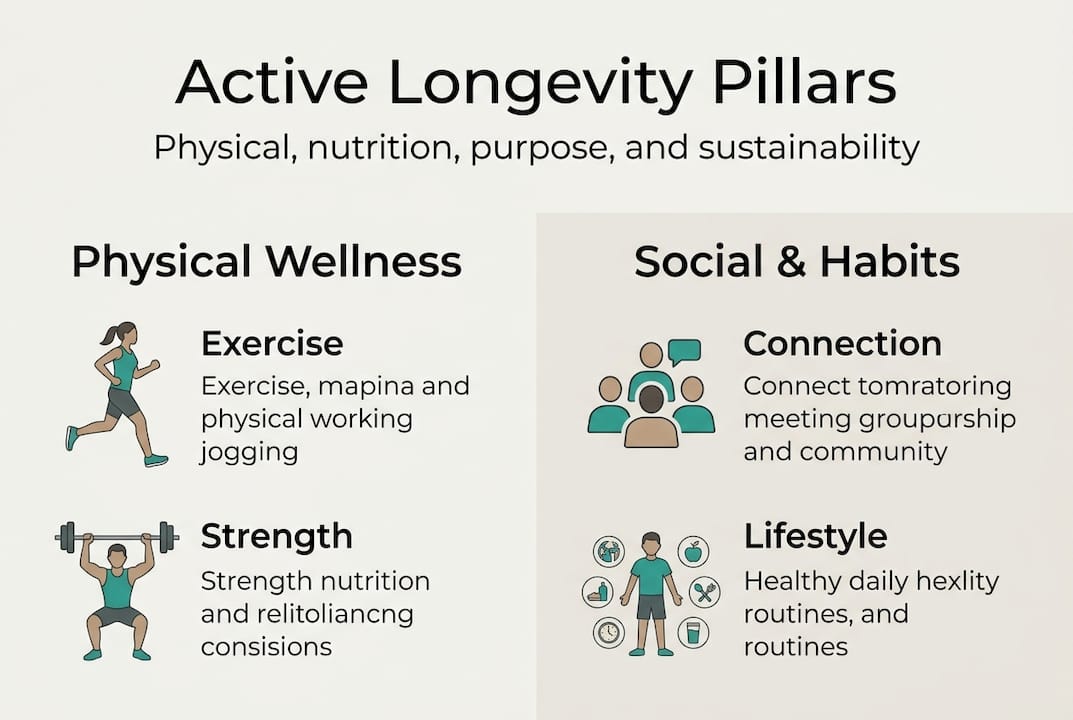
Research on so-called Blue Zones, regions where people consistently live past 90 in good health, consistently highlights social connection and purpose as defining factors. Not supplements. Not advanced medical interventions. Connection.
Active leisure versus passive leisure is a critical distinction for aging well:
| Activity type | Examples | Longevity impact |
|---|---|---|
| Active leisure | Gardening, dancing, volunteering, group sports | High: builds strength, purpose, connection |
| Passive leisure | Watching TV, scrolling social media | Low to neutral: limited cognitive or social benefit |
The gap between these two categories widens with age. Choosing active leisure isn’t just more fun. It’s measurably better for your brain, your body, and your sense of meaning.
Ways to foster purpose and connection in your daily life:
- Join a local club, sports team, or community garden
- Volunteer with organizations that align with your values
- Mentor younger colleagues or family members
- Pursue lifelong learning through courses, workshops, or reading groups
- Cultivate intergenerational friendships that broaden your perspective
Building the right mindset for longevity is as important as any physical habit. Purpose gives your health practices direction. Without it, even the best supplement stack or training program loses its power.
Why most longevity advice misses what truly matters
After exploring the evidence and practices, it’s worth reflecting on what most longevity-focused advice leaves out. Here’s our honest take: the wellness industry has a biohacking problem.
Too much of the conversation centers on advanced interventions, expensive diagnostics, and cutting-edge supplements, while the most powerful longevity levers sit in plain sight. Moving your body consistently. Eating real food. Sleeping well. Staying connected. These aren’t exciting. They don’t make headlines. But holistic engagement, not just lifespan metrics, is what drives genuine longevity gains for health-conscious adults.
The surprising truth? The biggest health gains don’t come from going from good to great. They come from going from sedentary to moderately active. That’s where the data is most dramatic, and it’s where most people actually are.
“Longevity isn’t just about adding years. It’s about adding meaning.”
We’ve seen this pattern repeatedly in the longevity expert insights we follow: the people thriving in later life aren’t necessarily the ones who optimized every biomarker. They’re the ones who built sustainable habits, stayed socially engaged, and kept a sense of purpose alive.
Pro Tip: Integrate your wellness practices with social and environmental awareness. Join a walking group instead of walking alone. Choose locally sourced food. These small shifts amplify both your health and your sense of connection to something larger.
Practical tools for your active longevity journey
Ready to take the next step? Understanding active longevity is one thing. Having the right tools to act on it is another.

At LifeUnlocked, we’ve built our entire approach around the holistic pillars covered in this article. Our BOOST 2.0 supplement combines creatine, taurine, lysine, and collagen to directly support muscle health, recovery, and connective tissue strength. Our Longevity Kits give you a structured, science-backed starting point for your healthspan journey. And if you want to know exactly where you stand right now, the Healthy Aging Self-test delivers personalized insights from the comfort of your home. Active longevity starts with knowing your baseline. Let’s find yours.
Frequently asked questions
How is active longevity different from just living longer?
Active longevity focuses on maintaining physical, mental, and social engagement throughout life, not just increasing the number of years you live. It prioritizes healthspan over lifespan.
What are the best exercises for active longevity?
Strength training, moderate cardio, and flexibility routines are most effective. Strength training 2 to 3 times per week has been shown to reduce muscle loss and lower mortality risk across age groups.
Is it too late to start active longevity practices after age 50?
Absolutely not. Research shows the largest health gains come from moving from a sedentary to a moderately active lifestyle, and this holds true even later in life.
How does social engagement impact longevity?
Meaningful social connections and purposeful activities enhance both health and longevity. Isolation, by contrast, is one of the most consistent predictors of accelerated aging.
Do sustainable lifestyle choices play a role in active longevity?
Yes. Active longevity intersects with sustainability and intergenerational equity, recognizing that individual well-being and collective environmental health are deeply connected.
Recommended
- The Pursuit of Longevity: A review of the Anti-Aging Obsession – LifeUnlocked
- Unlock Your Future: Building the Right Mindset for Longevity – LifeUnlocked
- Key Takeaways About Longevity: The Insights from longevity experts – LifeUnlocked
- What is healthy aging? A complete guide to holistic longevity – LifeUnlocked
- Metabolic Balance Coaching and Nutrition for Longevity | Striation 6
Share:
Step-by-step supplement guide: longevity in 5 moves
Omega-3 supplements: 5 years longer life evidence