
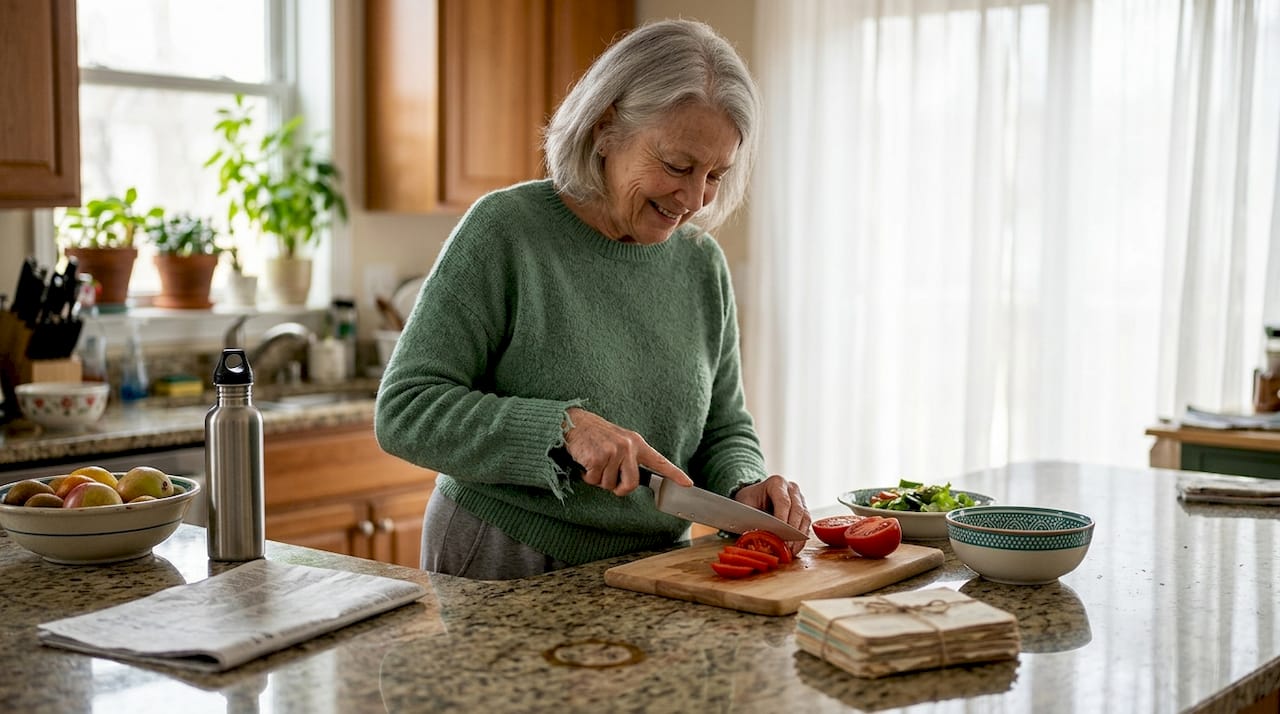
Most people assume aging well is mostly a matter of good genes or plain luck. That belief is one of the most persistent myths in modern health. The reality is that healthy aging is defined by the WHO not as the absence of disease, but as maintaining the functional ability that enables wellbeing. That shifts the entire conversation. It means your daily choices, your environment, your social connections, and your habits built over decades are the real drivers. This guide walks you through the science, the EU data, and the practical frameworks that give you real control over how you age.
Table of Contents
- How experts define healthy aging
- The science behind healthy aging: The life-course approach
- Holistic strategies: Diet, activity, and social connection
- European benchmarks and disparities in healthy aging
- Limitations, controversies, and the future of healthy aging
- Unlock personalized solutions for your healthy aging journey
- Frequently asked questions
Key Takeaways
| Point | Details |
|---|---|
| Whole-life approach | Healthy aging starts young and involves lifelong habits, not just late-stage interventions. |
| Beyond just genes | Nutrition, exercise, and social connections play major roles in healthy longevity. |
| Function over disease | Expert consensus now values preserving your ability to live and function over simply avoiding illness. |
| Inequalities exist | EU data shows significant healthy aging gaps by country, gender, and education. |
| Technology is rising | Advanced methods like AI are shaping prevention and longevity strategies in Europe. |
How experts define healthy aging
For decades, medicine measured aging success by one metric: how long you avoided serious illness. That model is outdated. Today, the leading framework comes from the World Health Organization, and it changes everything.
“WHO defines healthy aging as developing and maintaining the functional ability that enables wellbeing in older age.”
Functional ability is the key phrase here. It means your capacity to move, think, connect, and contribute, regardless of whether you carry a diagnosis. This framework introduces the concept of intrinsic capacity, which is the combination of your physical and mental capabilities at any given point in life. Think of it as your personal health reserve.
What shapes that reserve? Several interconnected factors:
- Physical health: Muscle strength, cardiovascular fitness, and metabolic balance
- Mental and cognitive function: Memory, emotional regulation, and resilience
- Social environment: Relationships, community ties, and access to support
- Built environment: Housing quality, air quality, and access to healthcare
This is why a guide to aging gracefully must go beyond supplements and step counts. The WHO model treats aging as a dynamic interaction between the person and their world. That is a far more honest and useful lens.
The science behind healthy aging: The life-course approach
With the definition in mind, the next question is: How does one actually age healthily across a lifetime? The answer from science is clear. You do not start preparing for healthy aging at 60. You start now, wherever you are.
Healthy aging is optimized from conception through older age, with prevention as a continuous process. This is the life-course approach, and it reframes aging as something you actively shape every decade, not a phase you eventually enter.
The WHO and UN strategy outlines ten priorities for healthy aging, which include:
- Combating ageism and age-based discrimination
- Developing age-friendly environments
- Providing integrated, person-centered care
- Supporting long-term care systems
- Improving measurement of healthy aging outcomes
- Expanding research on aging biology
- Strengthening workforce capacity for older adult care
- Harnessing technology for prevention and monitoring
- Addressing social determinants of health
- Promoting lifelong health behaviors
The EU is advancing this agenda with notable momentum. Person-centered, integrated care using advanced technologies is a central pillar of EU-funded research like the STAGE HORIZON project. Two terms worth knowing: integrated care means coordinating medical, social, and preventive services around the individual rather than around institutions. Exposome refers to the total environmental exposures a person accumulates over a lifetime, from diet and pollution to stress and sleep. Researchers are now mapping how the exposome shapes aging trajectories.
Pro Tip: The best time to build longevity habits is before chronic problems appear. Explore practical longevity routines you can start integrating today, not after a diagnosis forces your hand.
Holistic strategies: Diet, activity, and social connection
Let’s move from theory to practical strategies that actually improve your chances of aging well. Three pillars consistently emerge from the research: what you eat, how you move, and who you spend time with.
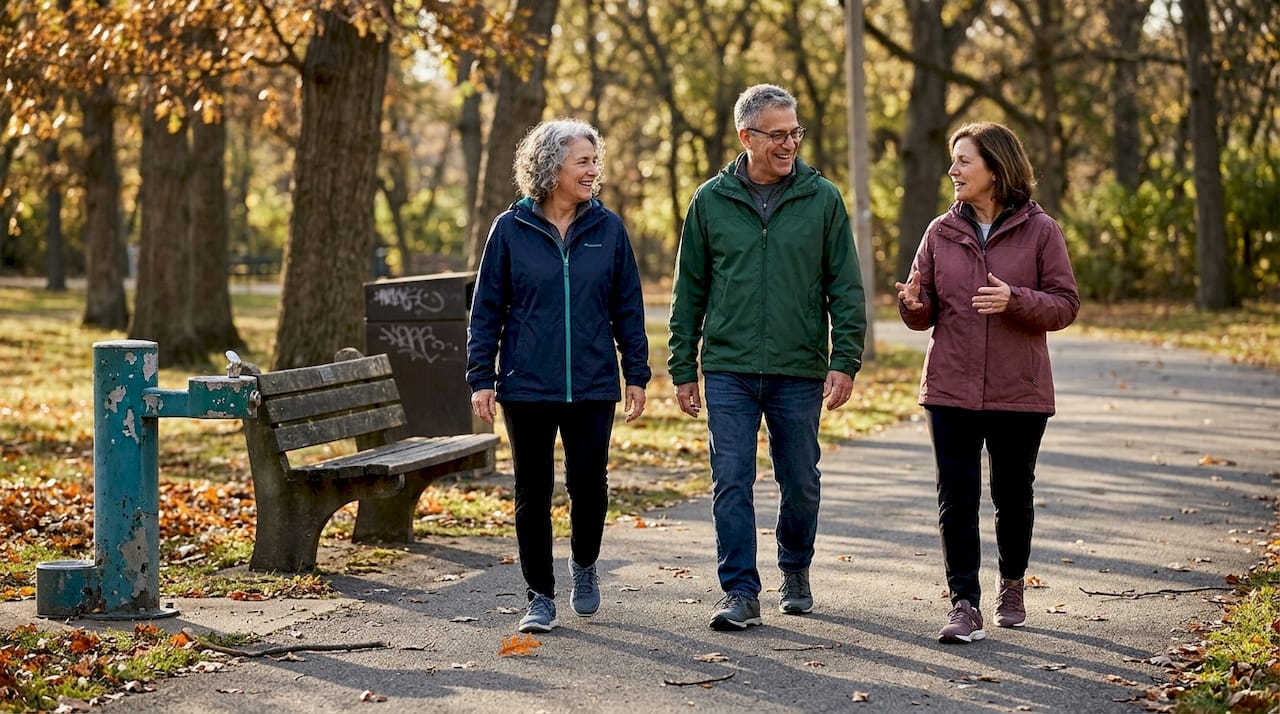
Mediterranean and plant-based diets reduce mortality rates and are among the most studied dietary patterns for longevity. These diets share a common architecture: high in vegetables, legumes, whole grains, and healthy fats, low in ultra-processed foods and red meat. They reduce systemic inflammation, which is one of the core biological drivers of accelerated aging.
Physical activity, caloric restriction, and social ties are all independently vital to healthy aging. Here is a quick overview of how specific interventions map to outcomes:
| Intervention | Primary benefit | Evidence strength |
|---|---|---|
| Mediterranean diet | Reduced cardiovascular mortality | Very strong |
| Resistance training | Preserved muscle mass and strength | Strong |
| Caloric restriction | Metabolic efficiency, reduced inflammation | Moderate to strong |
| Social engagement | Lower cognitive decline risk | Strong |
| Aerobic exercise | Improved cardiorespiratory fitness | Very strong |
| Sleep optimization | Hormonal balance, cellular repair | Strong |
A balanced diet built for longevity does not require perfection. It requires consistency. The same applies to movement. For a European lifestyle, this might look like daily walking, two resistance sessions per week, and one longer weekend activity.
Caloric restriction is gaining serious scientific attention for its effects on telomere length and metabolic health. You do not need to starve. Modest reductions in caloric intake, combined with nutrient density, appear to activate cellular repair pathways. For those concerned about muscle loss with age, NMN and related compounds show promise in supporting muscle health as part of a broader strategy.
Pro Tip: Social engagement is not a soft add-on. It is as biologically significant as diet and exercise. Loneliness activates the same inflammatory pathways as chronic stress. Prioritize your relationships with the same intention you bring to your nutrition.
European benchmarks and disparities in healthy aging
But how does healthy aging actually play out across the European Union, and what are the real-world challenges? The data tells a nuanced story.
Two key metrics define the field. Healthy Life Years (HLY) measures the number of years a person is expected to live free from significant disability. Health-Adjusted Life Expectancy (HALE) weights years lived by health status. Both reveal that living longer does not automatically mean living better.
HLY at age 65 varies widely across EU member states, with some countries showing gaps of more than a decade between their best and worst performers. Northern and Western European countries generally outperform Southern and Eastern ones on HLY metrics, though life expectancy patterns sometimes run in the opposite direction.
| Region | Approximate HLY at 65 | Key influencing factors |
|---|---|---|
| Northern EU (e.g., Sweden, Denmark) | 10 to 13 years | Strong social systems, high activity levels |
| Western EU (e.g., Netherlands, Germany) | 9 to 12 years | Healthcare access, diet quality |
| Southern EU (e.g., Italy, Spain) | 7 to 10 years | Mixed diet quality, economic variation |
| Eastern EU (e.g., Bulgaria, Romania) | 4 to 7 years | Lower healthcare access, higher poverty rates |
Disparities exist between northern and southern EU, and by education level and gender. Women with lower education levels face compounded risk: they tend to live longer than men but spend more of those years with disability or chronic illness. This is not a minor footnote. It is a call to action for anyone planning their own aging trajectory.
For individuals, these benchmarks matter because they reveal what is possible and what is preventable. Explore insights from longevity experts to understand how top researchers are interpreting these gaps and what they recommend.
Limitations, controversies, and the future of healthy aging
Finally, it is important to build a balanced understanding of healthy aging, including what still challenges researchers and individuals alike. The science is strong, but it is not simple.
Some recent studies find functional limitations increasing in parts of Europe, even as overall longevity rises. This is the compression of morbidity debate: are we adding healthy years, or just more years? The answer varies by country, socioeconomic group, and individual behavior.
Key areas of ongoing debate and complexity include:
- ADLs and IADLs: Activities of Daily Living and Instrumental Activities of Daily Living are standard measures of functional independence. They do not always improve with longer life spans.
- Cognitive trajectories: Later-born cohorts show better cognitive function on average, but individual outcomes remain highly variable and not guaranteed.
- Multi-morbidity: Managing two or more chronic conditions simultaneously is now the norm for many older adults, not the exception. This complicates both research and personal health planning.
- Wellbeing vs. survival: Extra years of life do not automatically translate to higher subjective wellbeing. Quality of life metrics must be tracked alongside longevity data.
- Emerging tools: AI-driven risk prediction, exposome mapping, and systems biology approaches are reshaping how researchers model aging. These are not science fiction. They are active EU research priorities.
The pursuit of longevity is not about chasing immortality. It is about making the years you have as functional, connected, and meaningful as possible. That requires honest engagement with both the evidence and its limits.
Unlock personalized solutions for your healthy aging journey
Equipped with the latest science and practical strategies, you may now want to explore resources that fit your healthy aging goals. Understanding the theory is powerful. Acting on it is transformative.

At LifeUnlocked, we translate the science of longevity into tools you can actually use. Our longevity kits include home DNA and blood test options that give you a personalized baseline, so you are not guessing about your health status. For targeted support, BOOST 2.0 combines creatine, taurine, lysine, and collagen to support muscle health and cellular resilience as you age. Pair these with our KLU app for ongoing fitness and nutrition guidance built around your biology, not a generic template.
Frequently asked questions
What are the main pillars of healthy aging?
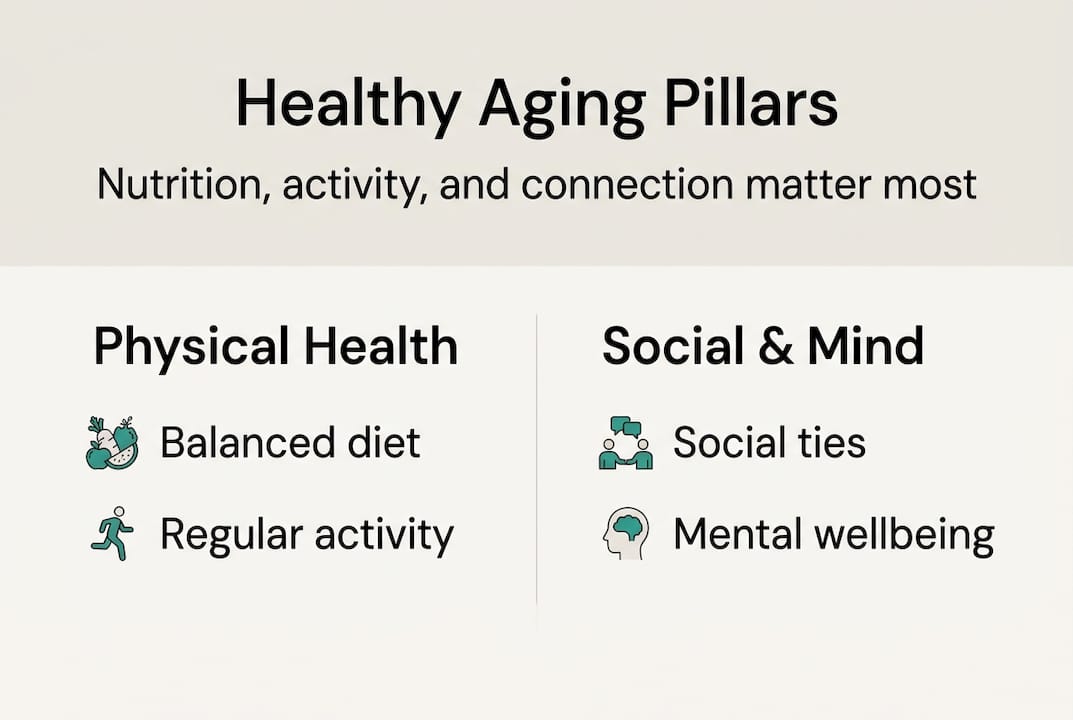
Nutrition, activity, social ties, and environmental adaptability form the core pillars. Each one reinforces the others, making a holistic approach far more effective than focusing on any single factor.
How does the WHO definition of healthy aging differ from traditional views?
WHO’s healthy aging definition centers on functional ability and wellbeing rather than simply the absence of disease. This shift means a person can age healthily even while managing a chronic condition.
Are there differences in healthy aging across EU countries?
Yes. HLY and healthy aging disparities vary significantly by country, gender, and education level within the EU, with Eastern European nations generally showing lower healthy life years at age 65.
What is the role of technology in healthy aging?
AI, exposome analysis, and longitudinal cohorts are emerging EU tools that help predict individual aging risks and personalize prevention strategies before problems become serious.
Does living longer always mean better health?
Not always. Some evidence shows that increased longevity in parts of Europe comes alongside stable or even rising rates of functional limitations, meaning extra years are not automatically healthy years.
Recommended
- The Pursuit of Longevity: A review of the Anti-Aging Obsession – LifeUnlocked
- Aging Gracefully: A Comprehensive Guide to Optimal Healthspan – LifeUnlocked
- Unlocking Longevity 2024: Practical Tips and Routines for a Longer, He – LifeUnlocked
- Unlock Your Future: Building the Right Mindset for Longevity – LifeUnlocked
- Wellness Coaching - Esențial Impact – Bunăstare cu doTERRA
- Rolle von Fitness im Alter: Mehr Lebensqualität
Share:
Top Anti-Aging Nutrition Tips Backed by Science for 2026
Step-by-step supplement guide: longevity in 5 moves